Pea Gravel Sizes, Uses and Depth for Patios, Paths and Play Areas
By Erdi Doğan, owner and editor ·
Drafted with AI assistance; every number checked against the cited source.
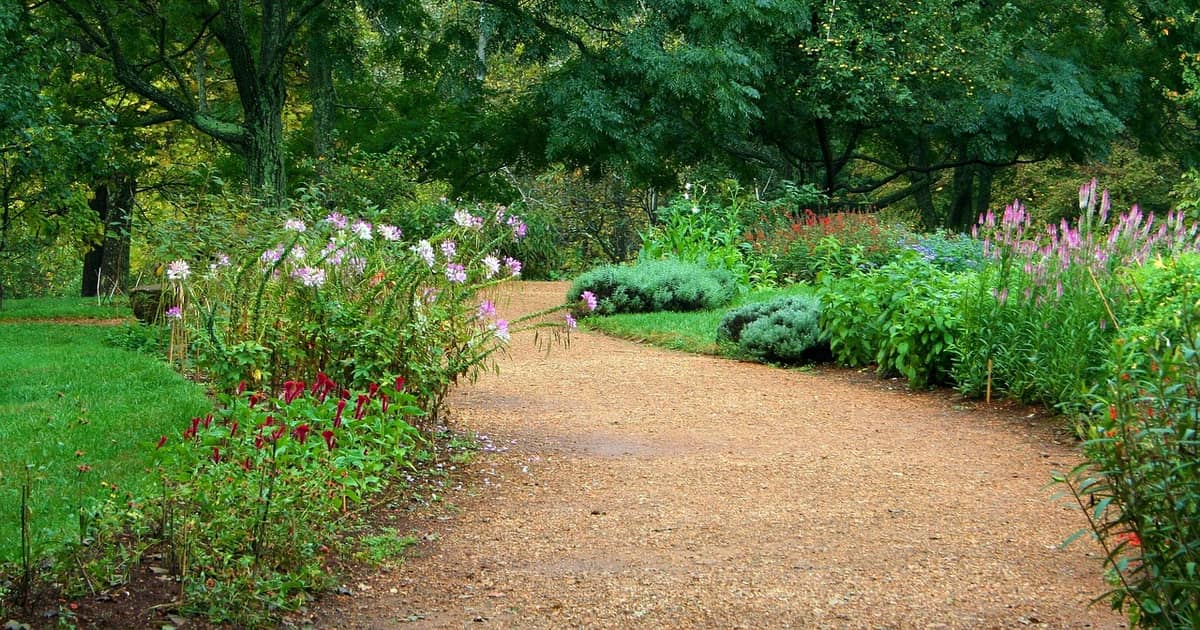
Pea gravel is small, smooth, rounded stone, and the size most suppliers sell is 3/8 inch (about 9.5 mm). Some landscape yards also stock a 1/2 inch (about 12.7 mm) grade. A loose cubic yard of it weighs roughly 2,500 to 2,700 lb (about 1,130 to 1,225 kg), and how deep you spread it depends on the job: about 1 inch as a mulch, about 2 inches on a patio, and at least 9 inches under a play structure. Below are the sizes, the uses, the depth for each project and the sources behind every number.
What size is pea gravel?
The common size is 3/8 inch. Ozinga, a Chicago-area concrete and aggregate producer, writes that pea gravel "is typically 3/8"" with "rounded and smooth sides." A bulk product sold under the Vulcan Materials name is also listed as "Pea Gravel 3/8"". Needham's Nursery sells a 1/2 inch version described as "tiny smooth stones."
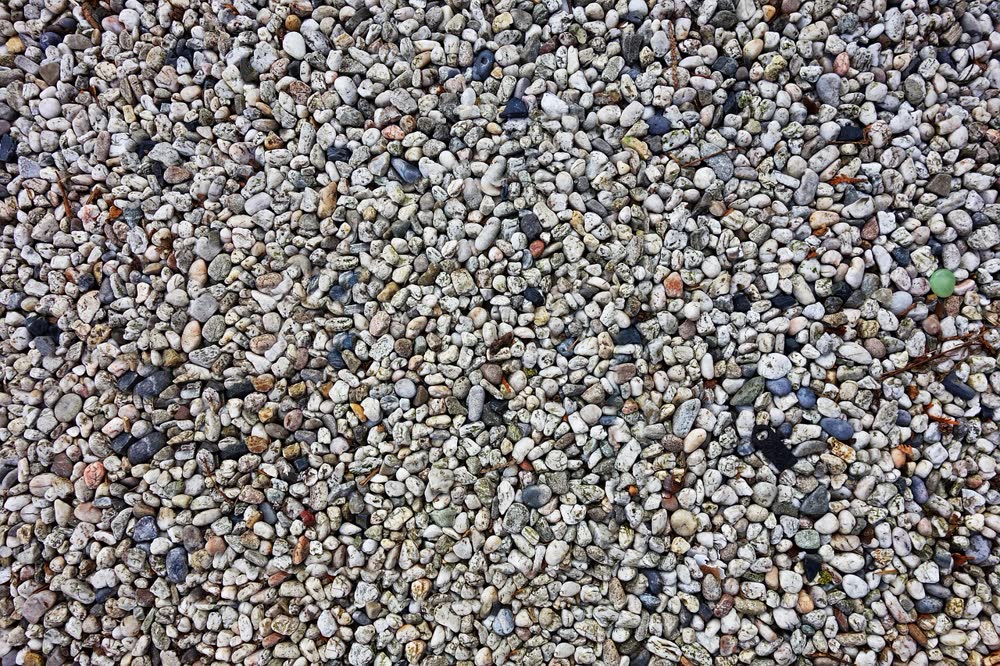
Pea gravel is a trade name, not a standard size number. The closest standard size is No. 8 stone, which runs from 3/8 inch down to about 0.094 inch (9.5 to 2.4 mm) according to Chaney Enterprises. Under the AASHTO size No. 8 gradation, 100% passes a 1/2 inch sieve and 85 to 100% passes 3/8 inch. No. 8 is usually crushed, though, so it is angular where pea gravel is round. If you need a particular size, ask the yard for its gradation sheet rather than going by the name.
Pea gravel compared with other common stone
| Stone | Typical size | Shape | Loose weight per cu yd | Best known for |
|---|---|---|---|---|
| Pea gravel | 3/8 in (9.5 mm); some yards sell 1/2 in | Rounded, smooth | 2,500–2,700 lb (1.25–1.35 tons) | Paths, patios, play areas, dog runs, drainage |
| No. 8 stone | 3/8 in to 0.094 in (9.5–2.4 mm) | Usually crushed, angular | No verified figure | Fine crushed stone; also called 1B or 1/2 in in PA |
| No. 57 stone | 1 in to 0.19 in (25–4.8 mm) | Crushed, angular | 1.35–1.45 tons (crushed drainage stone) | Stone driveways, drainage, concrete aggregate |
| River rock | 1–3 in (25–76 mm) | Rounded | 2,800–3,000 lb (1.4–1.5 tons) | Decorative beds, dry creek beds |
Weights are typical loose figures from one landscape supplier (Mulch Mound) and vary with moisture and the exact stone. The No. 57 notes come from York Building Products, which says the size is "commonly used in asphalt mixes, ready-mix concrete and for stone driveways."
What is pea gravel used for?
Mostly for surfaces people walk, sit or play on, because the round stones are comfortable underfoot. Ozinga lists these uses:
- Walkways and patios. The smooth finish suits foot traffic.
- Playgrounds and dog runs. Ozinga notes that crushed stone, with its rougher edges, "may not be the best choice" for these.
- Garden and flower bed accents. It comes in many colors, from brown and gray to red and blue.
- Drainage and pipe bedding. These are below-ground jobs, just as with crushed stone.
- Fence posts. Ozinga calls it "a good choice" as an aggregate for fence post installation. If you are setting posts in concrete instead, the concrete calculator works out the bags per hole.
How deep should pea gravel be?
It depends on the job, and the recommended depths range from 1 inch to 9 inches or more. These are the figures from the sources we checked:
| Project | Pea gravel depth | What goes under it | Source |
|---|---|---|---|
| Mulch in planting beds | 1 in (2.5 cm) | Soil | University of Maryland Extension: "Apply gravel, stone, or lava rock in a 1-inch layer." |
| Patio surface | 2 in (5 cm); about 3 in (7.5 cm) at most | 4 in (10 cm) of compacted crushed angular gravel | Mulch Mound |
| Under play equipment | 9 in (23 cm) protects to a 5 ft (1.5 m) fall height | Per the surfacing guidance | CPSC table, as published by NDSU Extension |
On a patio, more is not better. Mulch Mound warns that past three inches "the surface becomes spongy underfoot," furniture legs sink in and stones get tracked indoors. Below two inches, bare spots show at the edges and on the busiest paths.
For playgrounds, the 9 inch figure is a minimum compressed depth from the U.S. Consumer Product Safety Commission's table, which NDSU Extension reprints in its "Is Your Playground Safe for Kids?" guide. Loose fill packs down and gets kicked aside, so check the depth again after it settles and top it up. The same table shows that some other loose fills protect from higher falls at the same depth. If your equipment is taller than 5 feet, read the full CPSC handbook before you choose a surface.
Is pea gravel good for a driveway?
Not as the layer that carries the car. Ozinga explains that crushed stone "can be easily tamped or rolled into place, which creates a more stable surface for areas such as driveways." Pea gravel's round shape does the opposite. Mulch Mound describes the stones as rolling "against each other instead of interlocking." Ozinga also notes that because it is small, pea gravel "will move easily if not edged properly." For a driveway, the usual choice is crushed stone such as No. 57, which York Building Products lists for stone driveways.
What should go under pea gravel?
For anything you walk or sit on, put a compacted base of crushed angular stone underneath and hold the edges in. Mulch Mound's patio method uses 4 inches of compacted crushed gravel, then 2 inches of pea gravel, for a total excavation of 6 inches (15 cm). It treats landscape fabric between the two layers as optional but useful, because it slows weeds and keeps pea gravel from working down into the base. Ozinga recommends concrete blocks or landscape trim along walkways and beds to keep the stones in place.
How much does a cubic yard of pea gravel weigh?
Plan on about 1.25 to 1.35 short tons per loose cubic yard (2,500 to 2,700 lb). This is the range our gravel calculator uses. Published figures vary, though, even from one seller. The same supplier gives 2,500 to 2,700 lb in one article and "roughly 1.4 to 1.5 tons per cubic yard" in its patio guide, adding that the number "shifts depending on moisture content and exact stone size." Quarries often sell by the ton, so ask yours what one yard of their pea gravel weighs before you convert.
Worked example: a 12 × 16 ft pea gravel patio
The formula is length (ft) × width (ft) × depth (in) ÷ 324 = cubic yards, because one cubic yard holds 27 cubic feet and a foot has 12 inches (27 × 12 = 324).
- Area: 12 × 16 = 192 sq ft (17.8 m²).
- Pea gravel at 2 in: 192 × 2 ÷ 324 = 1.19 cu yd (0.91 m³), about 1.5 to 1.6 tons at 1.25 to 1.35 tons per yard. In 0.5 cu ft bags that is 1.19 × 27 ÷ 0.5 = about 64 bags.
- Crushed base at 4 in: 192 × 4 ÷ 324 = 2.37 cu yd (1.81 m³), about 3.2 to 3.4 tons at the 1.35 to 1.45 tons per yard typical for crushed drainage stone.
To run your own numbers, including circles, metric inputs and a printable shopping list, use the gravel calculator. For volume only, use the cubic yard calculator.
Downsides of pea gravel
- It moves. Without edging it spreads into lawns and beds (Ozinga), and foot traffic pushes it toward the edges (Mulch Mound).
- It doesn't lock together. That makes it a poor structural layer for driveways or anything that needs a firm, compacted surface.
- It holds heat. Ozinga notes that this "can be bad for some plants," so choose plants that tolerate it if you use it as a bed cover.
- It sinks into soft ground. Without a base, Mulch Mound says it settles unevenly, especially in clay soil.
- Too much feels unstable. Keep a patio surface to about 2 to 3 inches.
Check your local codes, your HOA rules and the surfacing guidance for any public or shared playground before you start.
Sources
- Ozinga, "Crushed Stone vs. Pea Gravel: What's the Difference?" (ozinga.com/blog/crushed-stone-vs-pea-gravel-whats-the-difference), opened 2026-10-20.
- Bee Green Recycling & Supply, "Pea Gravel 3/8"" (Vulcan Materials Company), beegreen.green, opened 2026-10-20.
- Needham's Nursery, "1/2" Pea Gravel" product page, needhamsnursery.com, opened 2026-10-20.
- Chaney Enterprises, "Aggregate Sizing Explained" (No. 8 and No. 57 nominal sizes), chaneyenterprises.com.
- New Enterprise Stone & Lime Co., "Size & Grading Requirements for Coarse Aggregates" (AASHTO size No. 8 gradation), nesl.com.
- York Building Products, "Aggregate Products Portfolio" (AASHTO No. 57 and No. 8), yorkbuilding.com.
- Mulch Mound, "How Many Tons of River Rock Do You Actually Need" (pea gravel and river rock weights) and "How Much Gravel for a French Drain?" (crushed drainage stone weight), mulchmound.com.
- Mulch Mound, "Pea Gravel Patio Depth: How Much Stone to Order and Why" (June 4, 2026), mulchmound.com, opened 2026-10-20.
- University of Maryland Extension, "Mulching Trees and Shrubs," extension.umd.edu.
- NDSU Extension, "Is Your Playground Safe for Kids?" (FN1374, reviewed January 2023), Table 1, citing the U.S. Consumer Product Safety Commission, ndsu.edu.
- U.S. Consumer Product Safety Commission, Public Playground Safety Handbook (cpsc.gov/s3fs-public/325.pdf).