Cement vs Concrete vs Mortar: What Each Bag Is and Which to Buy
By Erdi Doğan, owner and editor ·
Drafted with AI assistance; every number checked against the cited source.
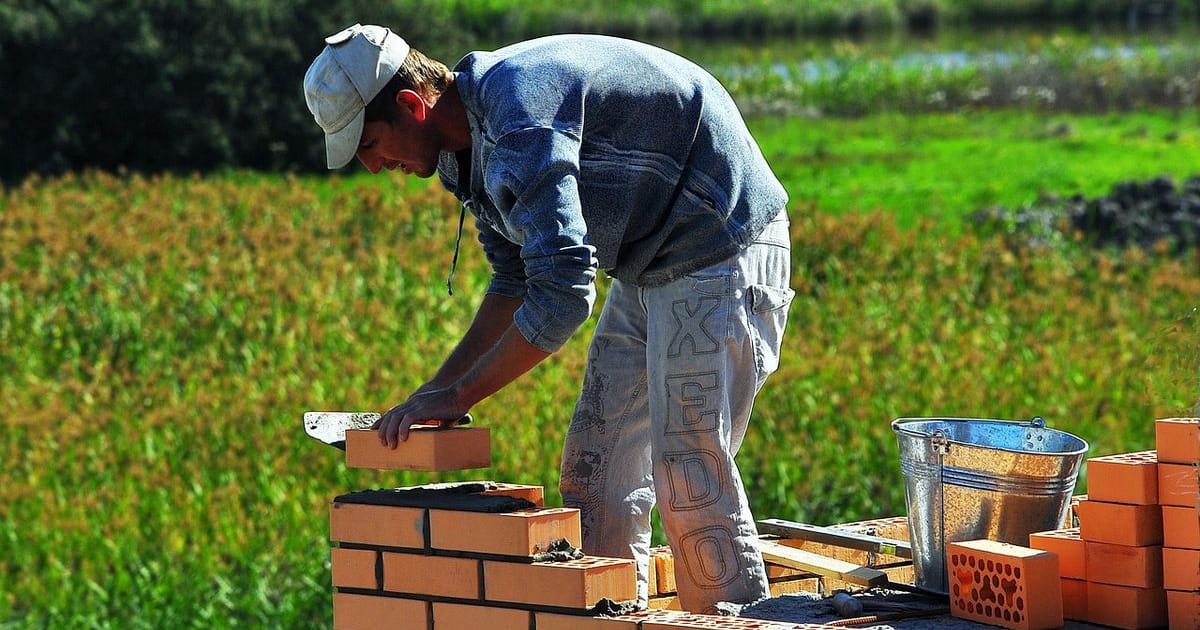
Cement is an ingredient. Concrete and mortar are what you make with it. Portland cement is a fine gray powder that hardens when it reacts with water. Concrete is cement paste binding sand and gravel or crushed stone, with cement making up only about 10 to 15 percent of the mix by volume (American Cement Association). Mortar is cement (usually with lime) and sand, but no gravel, and it is made for laying brick, block and stone, not for pouring slabs. The answers below cover the questions people actually ask, using the numbers printed on the bags. If you already know it is concrete you need, the concrete calculator works out the bags, and our concrete projects hub covers the rest of the job.
Which bag is which at the store?
Four gray bags in the concrete aisle look almost the same. QUIKRETE's data sheets show how different they are:
| Bag | What's in it | Made for | Thickness | Typical strength |
|---|---|---|---|---|
| Portland Cement (No. 1124), 94 lb | Cement only | An ingredient you mix with sand, gravel or lime yourself | Not used on its own | Depends on your mix |
| Concrete Mix (No. 1101), 40–90 lb | Cement, sand and gravel, pre-blended | Slabs, patios, sidewalks, steps, footings, post holes | 2 in (50 mm) or more | 4,000 psi at 28 days |
| Sand/Topping Mix (No. 1103), 10–80 lb | Cement and sand (no gravel) | Overlays, patching and leveling steps and walks, filling block cores | Less than 2 in (50 mm) | 5,000 psi at 28 days |
| Mortar Mix (No. 1102), 10–80 lb | Pre-blended, sanded Type N mortar | Laying brick, concrete block and stone | Bed joint about 1/2 to 3/4 in (13–19 mm) | 750 psi minimum (Type N) |
The strength numbers come from different lab tests, so don't rank the bags by this column alone. Concrete Mix is tested as cylinders (ASTM C39), Sand/Topping Mix as 2-inch cubes (ASTM C109), and the mortar figure is the ASTM C270 minimum for its type. The thickness column matters more: concrete mix is for pours 2 inches thick or more, and topping mix is for anything thinner.
Is cement the same thing as concrete?
No. The American Cement Association (formerly the Portland Cement Association) puts it simply: "Cement is a key ingredient of concrete." In concrete, a paste of cement and water is mixed with aggregates (sand, gravel or crushed stone). As the cement reacts with the water, it binds them "into a rock-like mass" that keeps gaining strength, mostly in the first few weeks.
A 94 lb (43 kg) bag is the standard U.S. bag or "sack" of cement, according to the American Concrete Institute. QUIKRETE's Portland Cement data sheet says that five to six of those bags, mixed with the right amounts of sand and gravel, make about 1 cubic yard (0.76 m³) of concrete. By our arithmetic, that is 470 to 564 lb of cement in a yard of concrete. Using the unit weight on QUIKRETE's Concrete Mix sheet (about 140 lb per cubic foot), the whole yard weighs about 3,780 lb.
What is cement made of?
Portland cement starts as rock. The ACA says limestone, shale, iron ore and clay are heated in a kiln to 2,700 to 3,000 °F. The result, called clinker, is ground with gypsum, limestone and other materials into the powder in the bag. Lime and silica make up 85% of the ingredients, with alumina and iron oxide as the rest.
You may also see Type IL (portland-limestone cement) on newer bags. It is a blended cement, and the ACA says all the base types, portland and blended, suit general concrete work. Type I is the general-use portland cement, and Type II is for moderate sulfate exposure.
What is concrete made of, and what is the mix ratio?
Concrete is cement, water, sand and coarse aggregate (gravel or crushed stone). If you mix your own from a bag of portland cement, QUIKRETE's typical concrete recipe by volume is:
- 1 part portland cement
- 2 parts all-purpose sand (ASTM C33)
- 3 parts all-purpose gravel (ASTM C33)
Pre-mixed bags take out the guesswork. You only add water, and the yield is printed on the bag: an 80 lb bag of QUIKRETE Concrete Mix makes about 0.60 cubic feet (17 L). To turn a slab size into bags or cubic yards, use the concrete calculator, which uses these same data-sheet yields.
What is the difference between mortar and concrete?
Mortar holds masonry units together. Concrete is the structure itself. Mortar has no gravel, so it stays smooth enough to spread on a trowel. QUIKRETE describes the right consistency as a 1/2 inch layer that "will not fall off your trowel when held in a near vertical position." An 80 lb bag of its Mortar Mix lays up to 37 standard bricks or 13 standard 8 × 8 × 16 in blocks.
Site-mixed mortar uses lime as well as cement. QUIKRETE's portland cement sheet gives these volume recipes:
| Mortar type (ASTM C270) | Portland cement | Hydrated lime Type S | Masonry sand | Minimum strength |
|---|---|---|---|---|
| Type S | 1 part | 1/2 part | 3-1/2 to 4-1/2 parts | 1,800 psi |
| Type N | 1 part | 1 part | 4-3/4 to 5-3/4 parts | 750 psi |
So is concrete "just mortar with rocks"? Partly: both are cement paste and sand, and concrete adds coarse aggregate. The recipes still differ (mortar adds lime and uses more sand per part of cement), and the two do different jobs. Don't pour a slab with mortar mix, and don't lay block with concrete mix.
Which is stronger, cement or concrete?
The question doesn't quite work, because cement isn't something you pour on its own. It is the glue, and strength is measured on the finished mix. The ACA notes that a concrete's rating, such as "3,000-pound concrete," means its compressive strength in pounds per square inch at 28 days. QUIKRETE's regular Concrete Mix tests at 2,500 psi at 7 days and 4,000 psi at 28 days, and its 5000 mix reaches 5,000 psi at 28 days. For a driveway or patio, the choice that matters is which concrete mix and how thick, not cement versus concrete.
Are sidewalks cement or concrete?
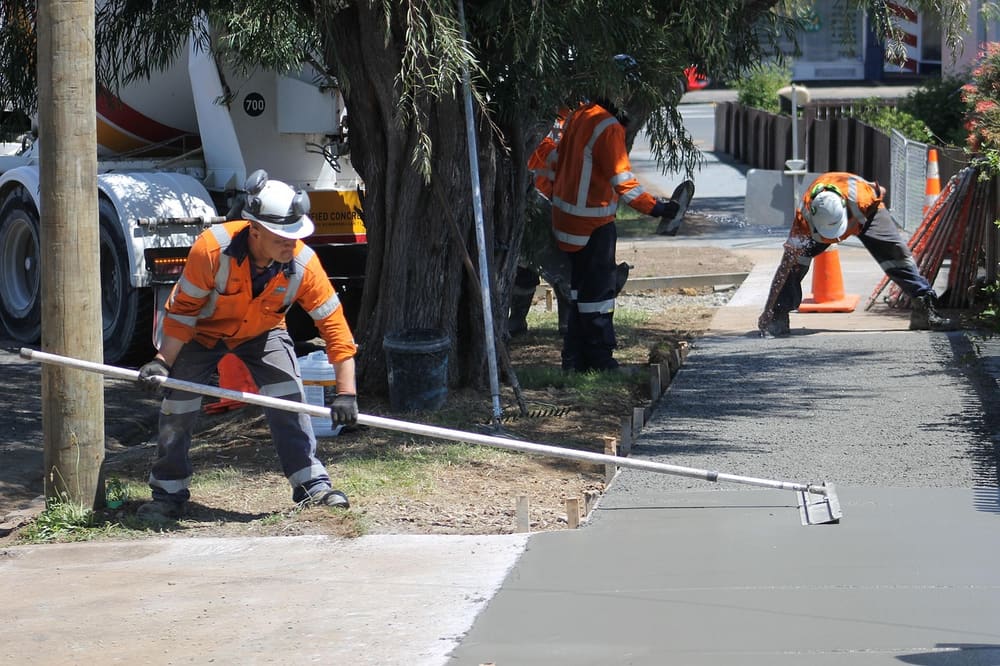
Concrete. People often say "cement sidewalk," but the sidewalk is concrete, and cement is about a tenth of it. QUIKRETE lists "sidewalks, curbs, steps, ramps and walkways" among the uses for its Concrete Mix. When you shop, ask for the product by its job: concrete mix to pour a walk, topping mix to resurface one, mortar mix to set the brick edging.
Picking the right bag for your project
- New patio, walk, pad or post footing: concrete mix. The calculator works out the bags, and the gravel calculator sizes the base under it.
- Resurfacing or patching less than 2 in deep: sand/topping mix. Concrete mix's gravel won't fit in a thin layer.
- Brick, block or stone walls, edging or a mailbox column: mortar mix.
- Your own recipe, a large job or stucco: portland cement plus separately bought sand, gravel or lime, following the volume recipes above.
- Odd shapes (a round pad, a step): work out the volume with the cubic yard calculator, then divide by the bag yield.
All of these products are caustic when wet. QUIKRETE's sheets tell you to wear impervious gloves, such as nitrile, when handling them. Follow the label on your bag for water amounts and curing, and check local codes before you build anything structural, such as footings for a deck.
Sources
- American Cement Association (formerly Portland Cement Association), "Cement & Concrete FAQ," cement.org/cement-concrete/cement-concrete-faq/, opened 2026-10-20.
- American Cement Association, "How Cement Is Made," cement.org/cement-concrete/how-cement-is-made/, opened 2026-10-20.
- American Concrete Institute, FAQ "How much does a bag of cement weigh?", concrete.org (faqid=866).
- QUIKRETE, Portland Cement data sheet (Product No. 1124/1125), quikrete.com/PDFs/DATA_SHEET-PortlandCement.pdf, opened 2026-10-20.
- QUIKRETE, Concrete Mix data sheet (Product No. 1101), quikrete.com/PDFs/DATA_SHEET-Concrete Mix 1101.pdf, opened 2026-10-20.
- QUIKRETE, QUIKRETE 5000 data sheet (Product No. 1007), quikrete.com/PDFs/DATA_SHEET-QUIKRETE 5000 1007.pdf.
- QUIKRETE, Sand/Topping Mix data sheet (Product No. 1103), quikrete.com/PDFs/DATA_SHEET-Sand-Topping Mix 1103.pdf, opened 2026-10-20.
- QUIKRETE, Mortar Mix data sheet (Product No. 1102), quikrete.com/PDFs/DATA_SHEET-Mortar Mix 1102.pdf, opened 2026-10-20.