How Long Does Concrete Take to Cure? Walk, Drive and Strength Times From 6 Bag Labels
By Erdi Doğan, owner and editor ·
Drafted with AI assistance; every number checked against the cited source.
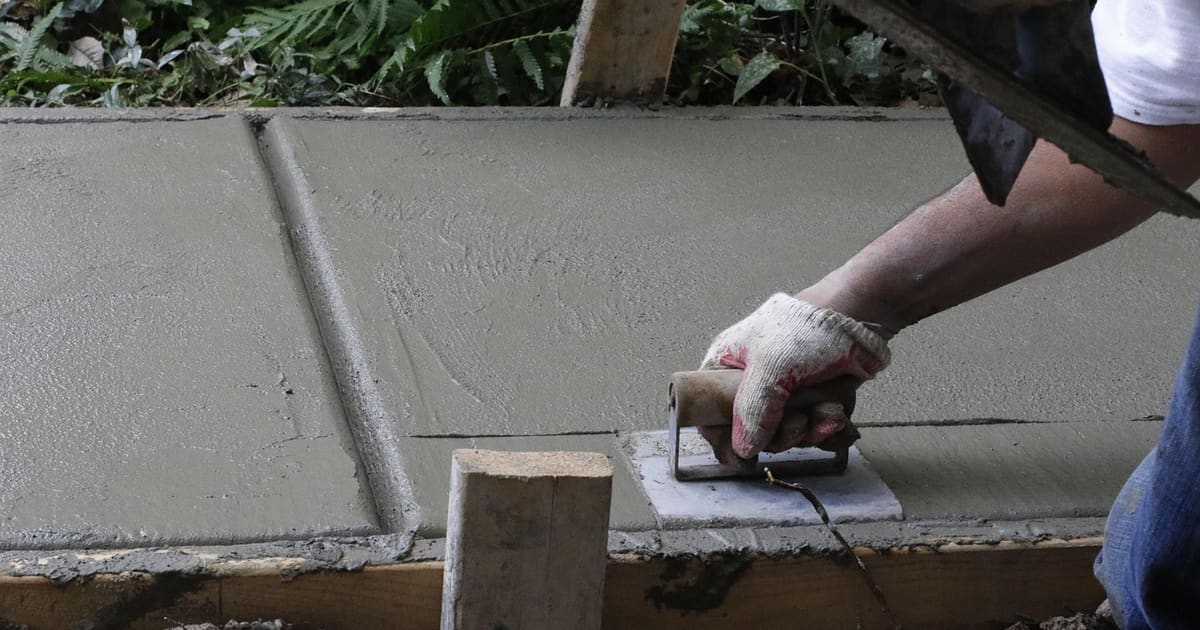
Concrete takes about 28 days to reach its rated strength, but you can usually walk on it after 4 to 24 hours and drive a car on it after 48 to 72 hours, depending on the mix. Those hours come from the six Quikrete and Sakrete data sheets compared below. Keep the slab moist for the first 3 to 7 days, the range the ready-mix industry association NRMCA gives, or it may never reach that rating. For the quantity side of the job, use the concrete calculator. The rest of the project is on the concrete projects hub.
How long does concrete take to cure, by bag?
It depends on the bag. These are the printed times from each manufacturer's data sheet. "Not published" means we didn't find a time on that sheet, so don't read it as "safe right away."
| Mix | Walk on it | Drive on it | Keep moist |
|---|---|---|---|
| QUIKRETE Concrete Mix (1101) | Not published | Not published | 5 days at 70°F or warmer; 7 days at 50–70°F |
| QUIKRETE 5000 High Early (1007) | 10–12 hours | Not published | 5 days at 70°F or warmer; 7 days at 50–70°F |
| QUIKRETE Fast-Setting (1004) | At least 4 hours | Not published | Sheet calls initial curing "very important"; see your bag for the method |
| Sakrete High-Strength | 24 hours | 72 hours | 3–5 days |
| Sakrete 5000 Plus | 12 hours | 72 hours | 3–5 days |
| Sakrete Fast Setting | 6 hours | 48 hours | "Several days" on flatwork |
The traffic lines on these sheets are per product. They don't change with thickness, so a 4-inch and a 6-inch slab get the same printed wait. Fence posts have their own line: wait 24 hours before putting any strain on a post set in QUIKRETE Concrete Mix or Sakrete High-Strength, and 4 hours with QUIKRETE Fast-Setting.
Can I drive on concrete after 2 days?
Only if the label says so, and of these six, only Sakrete Fast Setting does (48 hours). Sakrete's two other mixes say 72 hours. Quikrete's sheets give no vehicle time at all.
For a driveway poured from a ready-mix truck, there's no bag to read. The Illinois Ready Mixed Concrete Association's homeowner page says, "Do not drive on the 'new' concrete for at least 7 days." We'd use that for a truck-poured driveway unless your supplier says otherwise. None of the sheets gives a time for heavy trucks or RVs, so ask before you park one on the slab.
Is concrete 70% cured after 7 days?
Not on most of these bags. "About 70% at 7 days" is a line you'll often see, but the published 7-day results run from 63% to 88% of the 28-day rating. The percentages are our arithmetic from each sheet's psi table.
| Mix and 28-day rating | Psi at 7 days | Share of rating |
|---|---|---|
| QUIKRETE Concrete Mix, 4,000 psi | 2,500 | 63% |
| QUIKRETE Fast-Setting, 4,000 psi | 2,500 | 63% |
| Sakrete High-Strength, 4,000 psi | 2,500 | 63% |
| QUIKRETE 5000, 5,000 psi | 3,500 | 70% |
| Sakrete 5000 Plus, 5,000 psi | 3,500 | 70% |
| Sakrete Fast Setting, 4,000 psi | 3,500 | 88% |
These are test results for the product, not a reading of your slab. Quikrete calls its figures "typical results," and a slab that dried out or got cold can fall behind them.
Day 28 is also a measuring point, not a finish line. The American Cement Association says, "Standard practice is to measure concrete's compressive strength at 28 days," and that concrete "continues to harden and gain strength over time, although most of the strength is developed in the first few weeks after placement."
Curing vs drying: why a damp slab ends up stronger
Curing is a chemical reaction between cement and water, so a slab that dries too early stops gaining strength. (For what cement does in the mix, see cement vs concrete vs mortar.) NRMCA says "concrete in a dry environment can lose as much as 50 percent of its potential strength" compared with moist-cured concrete.
Drying is a separate, slower clock, and it matters mostly for floor coverings. Moisture-meter maker Wagner Meters gives a rule of thumb of about 28 days of drying for every inch of slab thickness, without naming a source. Before laying a floor, test the slab and follow the flooring maker's moisture limit.
How long to keep concrete covered, and how often to water it
Keep it covered or wet for 3 to 7 days, starting right after finishing. NRMCA says curing should continue "for at least 3 to 7 days" unless a specification says otherwise. "How often" has no schedule, because the goal is never letting the surface dry. NRMCA says "alternate wetting and drying is not an acceptable curing practice." Pick one method:
- Plastic sheeting: at least 4 mil thick, laid directly on the surface once it won't mar, with edges overlapped, taped and weighted (NRMCA). Sakrete says to place it after the concrete has set and, if the surface starts to look dry, to lift it, moisten and replace it. Wrinkles leave dark streaks, so avoid plastic where looks matter.
- Sprinkler or wet burlap: both are on Quikrete's list. Skip both when freezing temperatures are coming (NRMCA).
- Curing compound: a spray-on film, which Quikrete calls the easiest method. It says its Acrylic Cure & Seal removes the need for moist curing, at 200 sq ft per gallon in 2 thin coats at right angles. Timing is typically 4 to 6 hours after placing, as little as 2 to 3 hours in hot, windy weather, and at least 10 to 12 hours in cool weather. Apply it once the surface sheen is gone.
A regular sealer is a different product with a much longer wait. Quikrete's waterproofing sealer sheet says to allow a minimum of 30 days for new concrete to cure first, and the Illinois association gives about 30 days as well, when the surface is dry and it's above 55°F.
Concrete curing time in cold and hot weather
Cold stretches every time above and can ruin the slab if it freezes early. NRMCA's numbers:
- Fresh concrete freezes below about 25°F (−4°C), and frozen concrete can lose more than 50% of its potential strength.
- Protect it from freezing until it reaches 500 psi (3.5 MPa), about two days after placement. ACI gives the same 500 psi limit. The data sheets here that give a time say 48 hours.
- As a rule of thumb, a 20°F drop in concrete temperature roughly doubles the setting time.
- Keep placed concrete above 50°F (10°C).
So will concrete cure at 40°F? It keeps reacting, but slowly, and 40°F is the bottom of the printed range. Sakrete's sheets say to stay between 40°F and 90°F (4–32°C), and its High-Strength sheet says to tent and heat the area if temperatures are predicted to drop below 40°F. Quikrete calls for plastic sheeting and insulation blankets below 32°F (0°C). The printed hours come with no cold-weather conversion, so wait longer.
Heat works the other way. Concrete sets faster, and NRMCA says concrete cured at high temperature at an early age "will not be as strong at later ages" as the same mix cured around 70°F (20°C). Start curing as soon as finishing is done, and continue for at least 3 days.
How long does concrete need before rain?
Plan for 24 dry hours. Sakrete's sheets call for "no rain in the forecast" for 24 hours, and Quikrete says not to apply Cure & Seal if rain or heavy dew is expected within 24 hours. No sheet says how much rain a young slab can take, so cover it if the forecast changes.
A weekend slab, day by day
Here's what the labels add up to for Sakrete High-Strength poured at 8 a.m. on a Saturday at about 70°F. Cold weather pushes every line later.
| When | What you can do | Where the number comes from |
|---|---|---|
| Sunday, 8 a.m. | Walk on it; forms can come off (approx. 24 hours) | Sakrete data sheet |
| Tuesday, 8 a.m. | Drive a car on it, if you accept the 72-hour label over the 7-day driveway advice | Sakrete data sheet |
| Tuesday to Thursday | Stop moist curing (3–5 days) | Sakrete data sheet |
| Next Saturday | Label lists 2,500 psi, 63% of rating | Sakrete data sheet |
| Saturday, 4 weeks on | Rated 4,000 psi; earliest for de-icers (56 days is better) | Sakrete; Quikrete Fast-Setting sheet |
| Monday after that | Sealer can go on (30 days), if the surface is dry | Quikrete sealer sheet |
Before you buy, run your slab through the concrete calculator and see the concrete hub. These are label figures, not structural advice: for footings, foundations or anything load-bearing, check local codes, and always follow the label on your bag.
Sources
- QUIKRETE Concrete Mix data sheet (1101)
- QUIKRETE 5000 High Early Strength data sheet (1007)
- QUIKRETE Fast-Setting Concrete Mix data sheet (1004), rev. Nov 2025
- QUIKRETE Acrylic Concrete Cure & Seal data sheet (8730), rev. Oct 2020
- QUIKRETE Concrete & Masonry Waterproofing Sealer data sheet (8800-05)
- Sakrete High-Strength Concrete Mix technical data sheet
- Sakrete 5000 Plus technical data sheet
- Sakrete Fast Setting Concrete Mix technical data sheet
- NRMCA CIP 11, Curing In-Place Concrete
- NRMCA CIP 27, Cold Weather Concreting
- NRMCA CIP 12, Hot Weather Concreting
- American Concrete Institute FAQ: effect of freezing on concrete
- American Cement Association: Cement & Concrete FAQ
- Illinois Ready Mixed Concrete Association: driveways for homeowners
- Wagner Meters: concrete drying vs curing